Forte Diamante
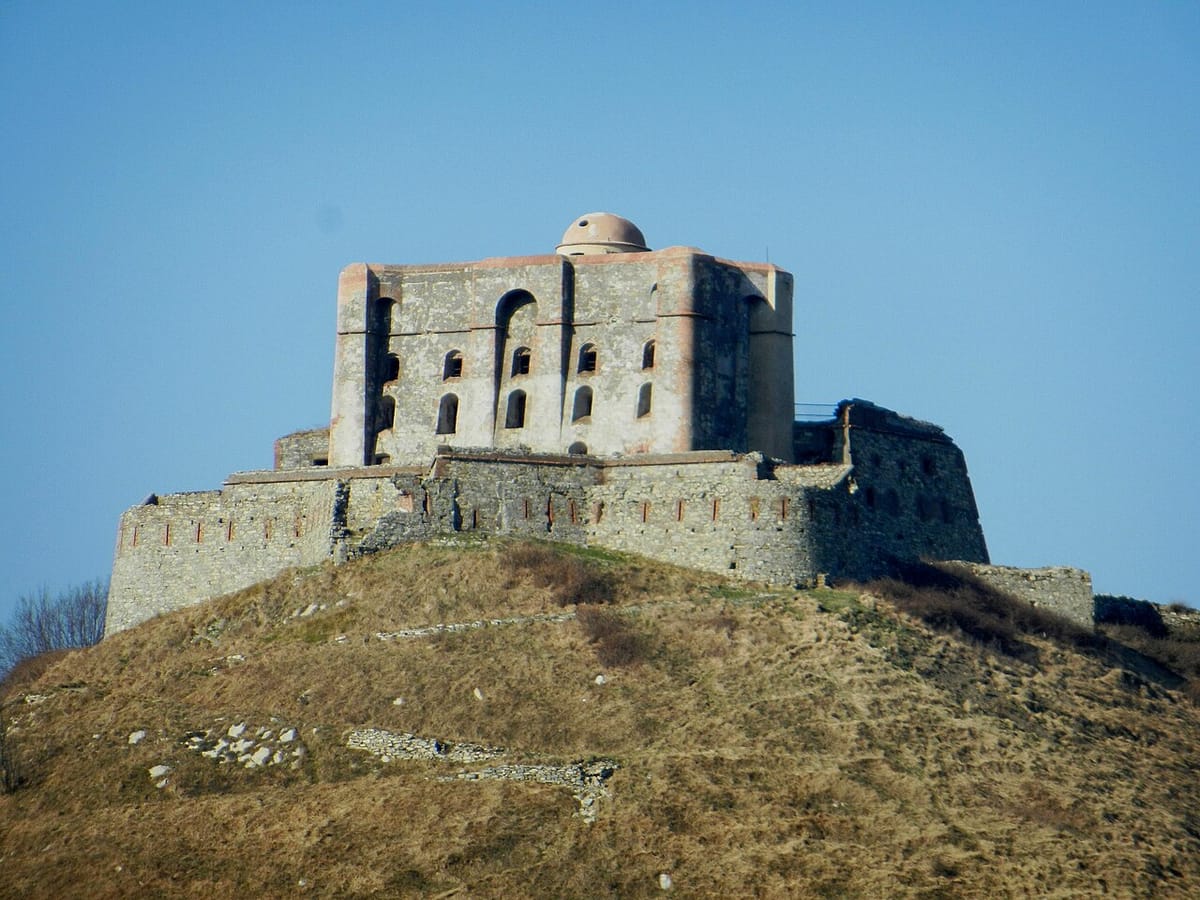
A Fortress in the Sky
Perched at roughly 667 metres above sea level on the summit of Monte Diamante, Forte Diamante is one of the most dramatic and rewarding destinations in the hills surrounding Genoa. Equal parts military monument and natural viewpoint, it rewards the effort required to reach it with sweeping panoramas across the Ligurian coastline, the city below, and two of the region's great valleys. For anyone exploring Liguria beyond the beaches and the famous caruggi, a visit here is an experience that lingers long after the walk is done.
Historical Background: The Republic of Genoa Builds for War
A fortress born from military necessity
Forte Diamante was constructed between 1756 and 1758, during a period of intense geopolitical tension across Europe. The Seven Years' War was reshaping alliances and threatening the security of smaller states, and the Republic of Genoa — already scarred by the Austrian occupation of 1746 — had every reason to reinforce its defensive perimeter. The ridge of Monte Diamante commanded the northern approaches to the city, controlling the corridors between the Polcevera and Bisagno valleys. Whoever held that summit could monitor — and threaten — movement on the main inland routes into Genoa.
The republic responded decisively. The project was entrusted to Jacques de Sicre, who worked in collaboration with Robert de Cotte and Marshal Antonio Federico Flobert. The resulting structure was a purpose-built military fortification designed according to the most advanced thinking of the era: the bastion system. Construction was completed in 1758, and the fortress immediately became a cornerstone of Genoa's wider ring of hill forts.
The star-shaped plan and its military logic
The most immediately striking feature of Forte Diamante — visible even from a distance — is its distinctive star-shaped footprint. This was not decorative. The polygonal bastion layout, refined over centuries of European military engineering, was specifically designed to eliminate the blind spots that had made older medieval towers vulnerable to cannon fire.
Each projecting point of the star allowed defenders to cover the base of adjacent walls with direct fire, meaning that attackers who tried to shelter against the fortification's sides could still be engaged. Overlapping fields of fire created a comprehensive defensive envelope around the entire perimeter. Thick stone walls absorbed and deflected artillery rounds far more effectively than the tall, thin walls of earlier fortifications. The elevated position amplified all of these advantages: any force attempting an assault uphill, into concentrated fire, faced near-impossible odds.
This combination of factors made Forte Diamante one of the most formidable points in the Genoese defensive ring — a ring that also included Forte Sperone, Forte Begato, Forte Puin and several other bastions connected by a network of walls and mule tracks across the hills.
Forte Diamante in Context: The Genoese Hill Fort System
Forte Diamante cannot be fully appreciated in isolation. It was one node in an ambitious network of fortifications that the Republic of Genoa — and later the Kingdom of Sardinia — constructed across the Ligurian Apennines north of the city. The system was designed to create interlocking zones of control, so that no single fort could be bypassed or isolated without exposing the attacker to fire from neighbouring positions.
The network stretched for kilometres along the ridgeline, and walking sections of it today reveals just how deliberately the terrain was exploited. The forts were sited at natural bottlenecks and high points, connected by paths that allowed rapid movement of troops and supplies. Forte Diamante, positioned at one of the highest points of the system, served as both a fighting position and an observation post with unmatched visibility over the surrounding countryside.
Over the nineteenth century, as the military importance of the hilltop forts declined with changing warfare technology, many fell into disuse and gradual decay. Forte Diamante suffered periods of neglect but has been preserved as a listed historical monument, giving visitors today the chance to read its architecture much as it was conceived nearly three centuries ago.
Architecture: Reading the Stones
Standing inside the walls of Forte Diamante, several architectural details repay close attention. The entrance, typically reached via a ramp rather than a direct gate, reflects the defensive thinking of the period: a ramp slows any forced entry and keeps attackers exposed longer. The interior layout — barracks, powder magazines, cisterns and fighting platforms — is compact and functional, every element subordinated to the primary purpose of sustained defence.
The stone used in construction is largely local, quarried from the surrounding hillside. It weathers into the grey-green tones of the Ligurian landscape, so that from a distance the fort seems to grow naturally out of the ridge. Up close, the precision of the masonry becomes apparent: the walls were built to last under cannon bombardment, and their thickness at critical points reflects careful engineering rather than simple bulk.
The panoramic terraces and wall-walks that ring the upper parts of the fort are among the most spectacular spots in the entire Genoese hinterland. On a clear day the view extends across the city to the Ligurian Sea, south to the arc of the Riviera, and north into the folds of the Apennines. Photographers and hikers prize these vantage points equally.
Getting There: Routes and Practical Information
The only way up is on foot
There is no road access to Forte Diamante. The fortress sits on a mountaintop, and the approach is entirely on foot. This is not a drawback — the hike is genuinely enjoyable, passing through chestnut and oak woodland before emerging onto open ridgeline with increasingly dramatic views — but it does require preparation.
From Trensasco via the Genova-Casella railway
The most popular and well-signposted approach begins from Trensasco, a small village served by the historic Genova-Casella narrow-gauge railway. Trains on this line depart from Genova Piazza Manin station. From Trensasco, a marked trail climbs steadily to the summit. The ascent takes between 1.5 and 2 hours depending on pace and fitness, gaining several hundred metres of altitude. The trail is classified as moderate: sustained uphill walking on good paths, with no technical scrambling required.
From Righi via funicular
An alternative starting point is Righi, the elevated neighbourhood on Genoa's northern rim that is reachable by funicular from the city centre (Largo della Zecca station). From Righi, a network of paths connects to the broader hill fort system and eventually to Forte Diamante. This route takes longer but offers the pleasure of walking the historic military paths that once linked the forts, passing through woodland and open hillside with views over the city.
From Bolzaneto by bus or train
Bolzaneto, a northern neighbourhood of Genoa served by regional trains and several bus lines, can also serve as a starting point for those approaching from the city's public transport network. From Bolzaneto, follow waymarked trails uphill toward the ridgeline; signage for the forts is generally reliable but a printed or downloaded map of the Alta Via dei Monti Liguri and the Genoese fort network is a useful backup.
What to bring
- Sturdy walking shoes or light hiking boots with ankle support
- At least 1.5 litres of water per person (there are no facilities at the fort)
- Snacks or a packed lunch — the summit makes an excellent picnic spot
- Layered clothing, since conditions at 667 metres can be significantly cooler and windier than in the city below
- A map or GPS track of the chosen route
- Sun protection in summer
Guided excursions
Several tour operators and hiking associations based in Genoa offer organised excursions to Forte Diamante. These typically include transport to the trailhead, a guided ascent with historical commentary, and sometimes a combined itinerary taking in more than one fort along the ridgeline. For visitors who prefer a structured experience with local expertise, this is an excellent option worth researching before arrival.
The Experience: More Than a History Lesson
Visiting Forte Diamante is not a passive museum experience. The combination of physical effort, open landscape and architectural discovery gives the visit a quality that is increasingly rare in popular heritage tourism. You earn the view by walking to it, and that earned quality changes how you see it.
From the walls, the logic of the entire defensive system becomes intuitive. You look down across the valleys the Republic of Genoa was protecting, trace the ridgeline to neighbouring forts, and understand immediately why this particular summit was chosen. The sea glitters in one direction; the mountains recede in the other. Genoa spreads across its narrow coastal strip below, framed between water and rock in the way that has shaped the city's character for centuries.
Trail runners have long adopted the ascent as a challenge — the final switchbacks in particular are notoriously steep — and the fort is popular with local families on weekends, particularly in spring and autumn when temperatures are ideal for hillwalking. In summer the early morning start is advisable to avoid midday heat on the exposed upper sections.
Frequently Asked Questions
Is Forte Diamante open to the public? The exterior of the fortress and its surroundings are freely accessible. Access to internal structures may vary; check locally for current conditions before visiting.
How difficult is the hike? The ascent is classified as moderate. It requires reasonable fitness and sturdy footwear but no technical mountaineering skills. The altitude gain is significant, so take your time.
Is the route suitable for children? Older children comfortable with sustained uphill walking will manage the trail well. The route is not suitable for pushchairs or for very young children.
When is the best time to visit? Spring and autumn offer the most comfortable temperatures and often the clearest visibility. Summer visits are perfectly possible but an early start is strongly recommended.
Can I combine Forte Diamante with other forts? Yes. The ridgeline trail connects several forts, and experienced walkers often plan loop routes that take in two or three in a single day. The Alta Via dei Monti Liguri passes through this area and provides a well-marked long-distance alternative for those with more time.
A Living Monument
Forte Diamante stands as a tangible link to an era when Genoa was a significant power in Mediterranean affairs, capable of commissioning ambitious military architecture on its own hilltops. Three centuries of weather, neglect and renewal have left their marks on the stone, but the essential form — the star-shaped plan, the thick walls, the commanding position — remains legible and impressive.
For any visitor to Liguria with a morning or afternoon to spare and a reasonable pair of walking shoes, it represents one of the most rewarding half-day excursions in the region: history, landscape and physical satisfaction combined in a single, memorable climb.